Cold-Brew Concentrate vs Ready-to-Drink Coffee
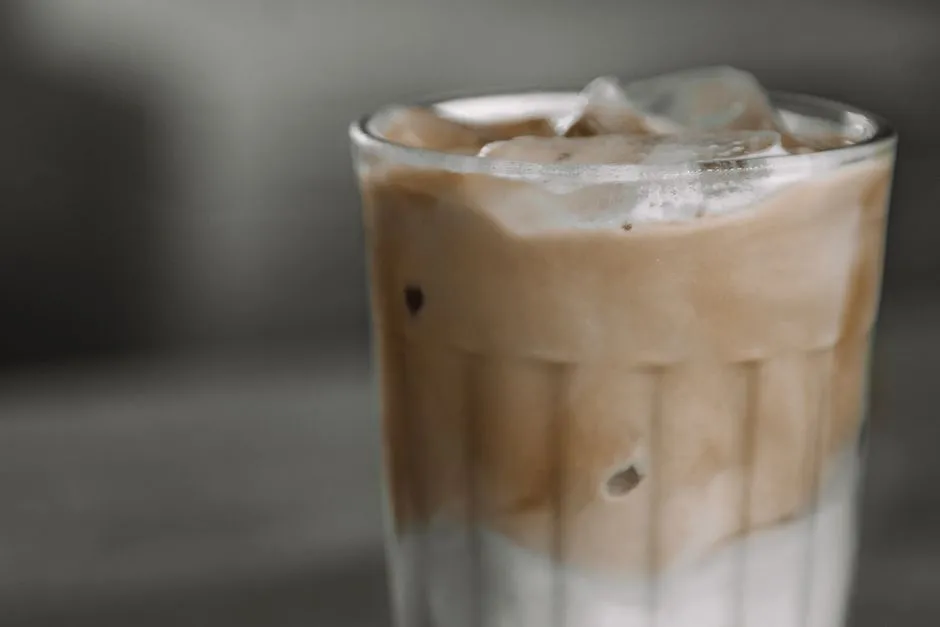
- What is the difference between cold-brew concentrate and ready-to-drink coffee?
- Which words on the bottle should you check first?
- Does every concentrate use the same dilution ratio?
- How do you calculate a finished amount without confusing the units?
- Does adding water reduce the caffeine?
- Is a label serving the same as the amount to pour?
- Which format fits your routine?
- What changes when milk or another addition enters the drink?
- Does cold brew always belong in the refrigerator?
- What should you remember at the shop?
- Sources
What is the difference between cold-brew concentrate and ready-to-drink coffee?
Cold-brew concentrate is intended for dilution according to its product directions; ready-to-drink coffee is already prepared for drinking. Compare the exact format, dilution instructions and caffeine information, not bottle size alone. Adding water changes concentration, not the total caffeine in the coffee you poured. Follow package refrigeration and opened-use instructions, check allergens in additions, and seek professional guidance when caffeine or dietary restrictions affect your choice.
This comparison covers commercially prepared bottled coffee for adult use. It does not provide a home-brewing method, a caffeine prescription or a claim that Half Cup Morning has tasted these products. The examples are desk-researched manufacturer information checked September 8, 2026; the decision tools and arithmetic are our own.
Which words on the bottle should you check first?
Start with the product's complete name. “Cold brew” alone does not establish whether dilution is required. Look for an explicit concentrate or ready-to-drink designation, then read the preparation instructions on the actual package.
For a concrete pair, Chameleon's current pages separately identify a 32 oz Black Cold-Brew Coffee Concentrate and a 10 oz Ready-to-Drink Black Cold-Brew Coffee. These are examples of two formats within one range, not evidence that every large bottle is concentrate or every small bottle is ready to drink.
The concentrate page lists organic cold-brew coffee made with water and organic coffee concentrate. The ready-to-drink page lists water and organic coffee within its cold-brew ingredient description. Read those lists as product identification, not as complete manufacturing formulas or proof of equal caffeine content.
| Question | Concentrate | Ready-to-drink |
|---|---|---|
| What preparation is intended? | Add the liquid specified by the maker | No required dilution to make the identified format drinkable |
| Which volume needs recording? | Concentrate poured and liquid added | Coffee poured, plus any optional additions |
| What establishes caffeine? | Product-specific information for the stated amount | Product-specific information for the stated amount |
| What establishes storage? | The exact package instructions | The exact package instructions |
The last two questions have the same answer in both columns. Format does not replace either check.
Does every concentrate use the same dilution ratio?
No universal ratio follows from the word concentrate. Chameleon's How to Use page recommends starting its 32 oz concentrates at one part concentrate to one part water or milk. Its iced example specifies 6 oz concentrate plus 6 oz water or milk, with ice.
That is a maker-specific preparation example, not our recommendation for how much caffeine to consume. Another product may require different directions. Do not transfer the ratio because its bottle looks similar.
Also distinguish equal parts from the final volume. A 1:1 concentrate-to-water instruction means that the two measured quantities match. It does not mean filling a glass with concentrate and adding an unspecified splash afterward.
There is a source-quality complication worth making explicit: some Chameleon web copy uses concentrate wording outside the clearly labelled concentrate section, including a reused preparation block on the ready-to-drink page. The page titles and main descriptions distinguish the formats. If your package directions conflict or remain unclear, ask the manufacturer before preparing it; this article does not resolve a specific bottle's instructions by guessing from reused website text.
How do you calculate a finished amount without confusing the units?
Use the package's ratio, then keep all liquid measurements in the same unit. The following is an original arithmetic exercise for a hypothetical product whose directions specify 1:1. It is not a new recipe or a suggested serving.
Suppose the planned liquid total is 240 ml, excluding ice:
- There are two equal parts: one concentrate and one water.
- Each part is 240 ÷ 2 = 120 ml.
- The record is therefore 120 ml concentrate plus 120 ml water.
- The measured liquid total is 120 + 120 = 240 ml.
If you instead pour 240 ml concentrate and then add an equal amount of water, the result is 480 ml. The ratio is still 1:1, but the amount of coffee concentrate is twice that in the first calculation. A correct ratio does not establish a suitable serving.
Ice needs space beyond the initial liquid volume. Do not interpret “240 ml liquid” as proof that a 240 ml vessel can hold the drink and ice. Choose a suitable vessel with adequate capacity; this article supplies no conversion between a cup of irregular cubes and the water they eventually produce.
Does adding water reduce the caffeine?
Adding plain water does not remove caffeine from a fixed amount of coffee. It spreads that amount through more liquid. Drinking the entire diluted mixture still includes the caffeine originally present in the coffee poured.
Keep two records separate: the amount of concentrate used and the finished beverage volume. A larger drink can contain the same amount of coffee as a smaller one, while two equally full glasses can contain different amounts.
The FDA's caffeine guidance notes that product amounts vary and directs consumers with questions to manufacturers. Do not infer a milligram figure from dark color, strong flavor, roast name or a concentrate ratio. The agency also notes that decaffeinated coffee still contains caffeine.
For pregnancy, trying to conceive, breastfeeding, medications, medical conditions or concerns about caffeine effects, discuss an appropriate limit with a healthcare professional. This comparison establishes no individual allowance and is not guidance for children.
Is a label serving the same as the amount to pour?
Not necessarily. The FDA explains serving information: a Nutrition Facts serving is not a recommendation of how much to consume, and a package may contain multiple servings.
For concentrate, first determine whether a stated figure refers to the liquid as sold or a prepared drink. Keep any preparation conditions attached to the number. “Per serving” is incomplete information if you have not recorded the serving volume.
For ready-to-drink coffee, do not assume the whole bottle is the relevant comparison simply because it is convenient to hold. Check the actual label. Chameleon's named 10 oz Black page, for example, identifies its serving as one bottle, 296 ml. That does not establish the serving basis of another product.
Our practical rule is to copy the unit immediately beside the figure. If you cannot identify the basis of a caffeine or nutrition claim, leave the comparison unresolved rather than converting it using an imagined portion.
Which format fits your routine?
Choose by the task you want the purchase to perform, after resolving ingredient and caffeine suitability.
Concentrate is a candidate when you are willing to measure a coffee portion and its required dilution each time. Ready-to-drink is a candidate when eliminating that required measuring step matters more. Those are workflow differences, not taste scores.
Use this original decision record:
| Your question | What to write down |
|---|---|
| What am I buying? | Exact product, flavor, size and market |
| What happens before drinking? | Required dilution, or verified ready-to-drink format |
| What amount will I use? | Coffee volume and any added liquid separately |
| What is still unknown? | Caffeine basis, ingredient question or unclear instruction |
| Can I store it correctly? | Required conditions and opened-use directions |
| What would make it unsuitable? | An unresolved dietary need or impractical handling requirement |
A purchasing decision can remain “neither yet.” You do not need to choose between two products whose instructions you cannot verify.
What changes when milk or another addition enters the drink?
Read the addition's own ingredients, allergen information and storage directions. Coffee preparation instructions do not answer those questions for an unrelated carton.
The FDA's allergen-label guidance recommends checking labels each time and notes that precautionary “may contain” statements are voluntary. Their absence does not rule out cross-contact. Ask the manufacturer about unresolved concerns, prevent cross-contact during preparation and follow individual professional advice.
Our barista versus regular oat-milk comparison addresses specific carton differences. It does not make every oat drink suitable for every person or extend the storage life of a mixed coffee.
Do not transfer a plain coffee bottle's opened-use period to a mixture containing milk. Follow the applicable instructions for all ingredients and local food-safety guidance.
Does cold brew always belong in the refrigerator?
The brewing label is not a storage instruction. A product requiring refrigeration while sealed must remain refrigerated; an unopened shelf-stable product has its own stated conditions. Check both before-opening and after-opening directions.
For perishable drinks and ingredients, FoodSafety.gov advises refrigeration at 40°F or below. Do not leave them out for more than two hours, reduced to one hour above 90°F. Return them promptly after pouring and count handling time cumulatively.
Discard a perishable drink with an unsafe or uncertain storage history. The FDA warns that normal appearance, smell and taste cannot establish safety. Fresh water, ice or milk does not undo unsafe handling.
This guide deliberately assigns no universal opened-bottle lifespan. Record the actual opening date and follow the product's applicable instructions.
What should you remember at the shop?
Identify the format before comparing sizes. Then check the preparation, amount used, ingredient suitability and storage requirements as separate decisions.
Our coffee-drinks collection provides the broader context, while light breakfasts covers a separate recipe category. Neither changes what a particular bottle says. The useful purchase is the one whose instructions you understand and whose handling requirements you can meet.
Sources
- Chameleon: 32 oz Black Concentrate.
- Chameleon: 10 oz Black Ready-to-Drink.
- Chameleon: preparation guidance.
- FDA: caffeine guidance.
- FDA: serving information.
- FDA: allergen labels.
- FoodSafety.gov: four food-safety steps.
- FDA: safe storage.
Primary pages accessed September 8, 2026.